
EC tells Supreme Court it can revise voter rolls to remove foreigners, defends Special Intensive Revision
The Election Commission of India on Tuesday asserted before the Supreme Court that it has both the power and constitutional competence to conduct a Special...
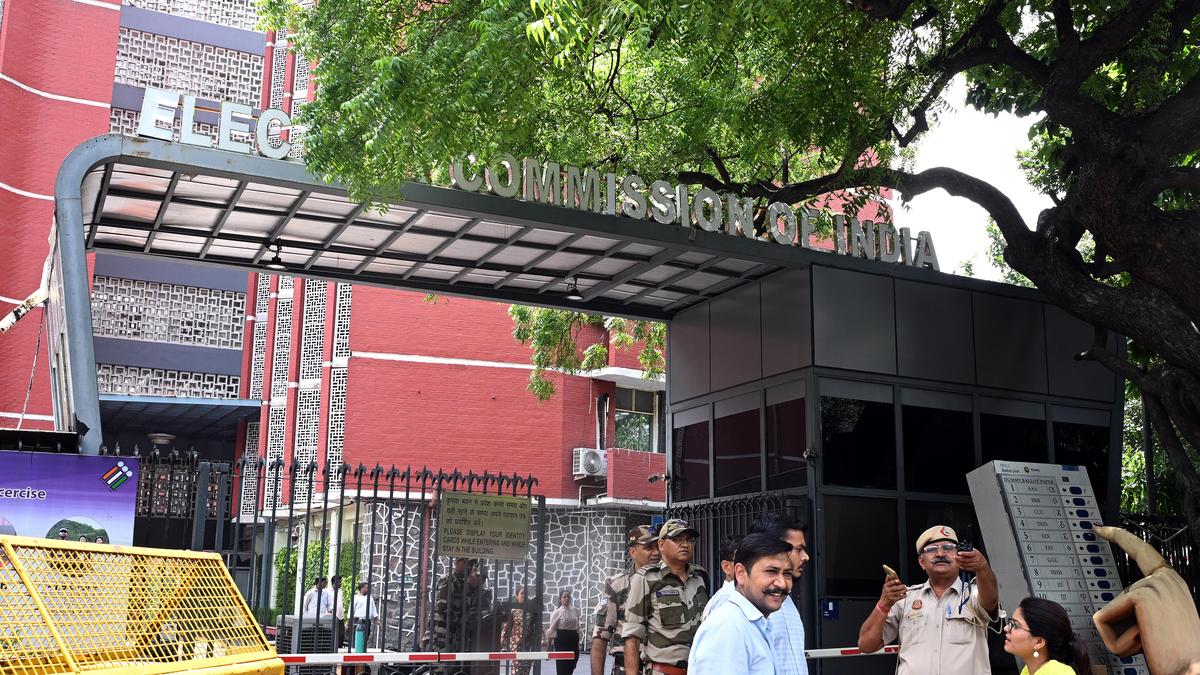
The Election Commission of India on Tuesday asserted before the Supreme Court that it has both the power and constitutional competence to conduct a Special Intensive Revision (SIR) of electoral rolls, arguing it is duty-bound to ensure that no foreigners are included as voters.
The submissions were made by senior advocate Rakesh Dwivedi, appearing for the EC, before a bench led by Chief Justice of India Surya Kant and Justice Joymalya Bagchi, as the court resumed final hearings on a batch of petitions challenging the exercise.
What the court is examining
The petitions question whether the EC can undertake an intensive verification of voter lists under the Constitution and election laws, and whether such an exercise could infringe on citizenship safeguards and the right to vote. The challenge focuses on SIRs announced in several states, including Bihar.
At the heart of the case is Article 324 of the Constitution, which gives the EC superintendence, direction and control of elections, and whether that power is limited by statute or must be applied case by case.
EC’s core argument: voter lists must be citizen-only
Dwivedi told the bench that citizenship is foundational to India’s constitutional design and public office. Citing provisions including Article 124(3) on judicial appointments, he argued that all key constitutional functionaries must be Indian citizens, as must those who vote.
Quoting constitutional principles, he said the framework is “citizen-centric”, adding that there is a constitutional duty to ensure electoral rolls contain no foreigners. According to him, the EC is not responding to political narratives but fulfilling a legal obligation.
He further submitted that Articles 324, 325 and 326, read with Section 16 of the Representation of the People Act, do not bar the EC from revising rolls to ensure eligibility. “The field is not totally foreclosed,” he said, asserting that the Commission retains authority to protect the purity of voter lists.
Not an NRC, EC tells court
Addressing concerns that SIRs could mirror a citizenship verification drive like the NRC, Dwivedi stressed the distinction.
“The NRC includes all persons, whereas the electoral roll includes only citizens above the age of 18,” he said, noting that those of unsound mind or otherwise disqualified are excluded by law.
He argued that even if “10 or thousands” of ineligible names are found, they must be removed, as Article 326 restricts voting to citizens and eligibility must be determined by a competent authority.
Historical context cited
To underline the constitutional intent, Dwivedi traced voting rights from the colonial era, referencing the limited franchise under the Government of India Acts and the gradual expansion after independence. He said the move toward universal adult suffrage reflects the Constitution’s aim to build a democratic, citizen-based polity.
What the bench has asked
Earlier, the court had queried whether the EC is barred from inquiring into doubtful citizenship and whether such an inquisitorial process falls outside its mandate. The answers to these questions will shape how far the Commission can go in verifying eligibility during roll revisions.
Dwivedi is scheduled to resume arguments on Thursday, January 8.
Why this matters
The outcome could redefine the scope of the EC’s authority over voter lists nationwide. A ruling in the EC’s favour would likely accelerate intensive verifications, potentially affecting millions of entries and influencing how states prepare electoral rolls before major polls. For citizens, it directly impacts who can vote and the process to prove eligibility.