
Ebola Scare: US Missionary Heads to Germany; Africa CDC Slams Travel Curbs
An American with Ebola is being treated in Germany amid travel restriction debate.
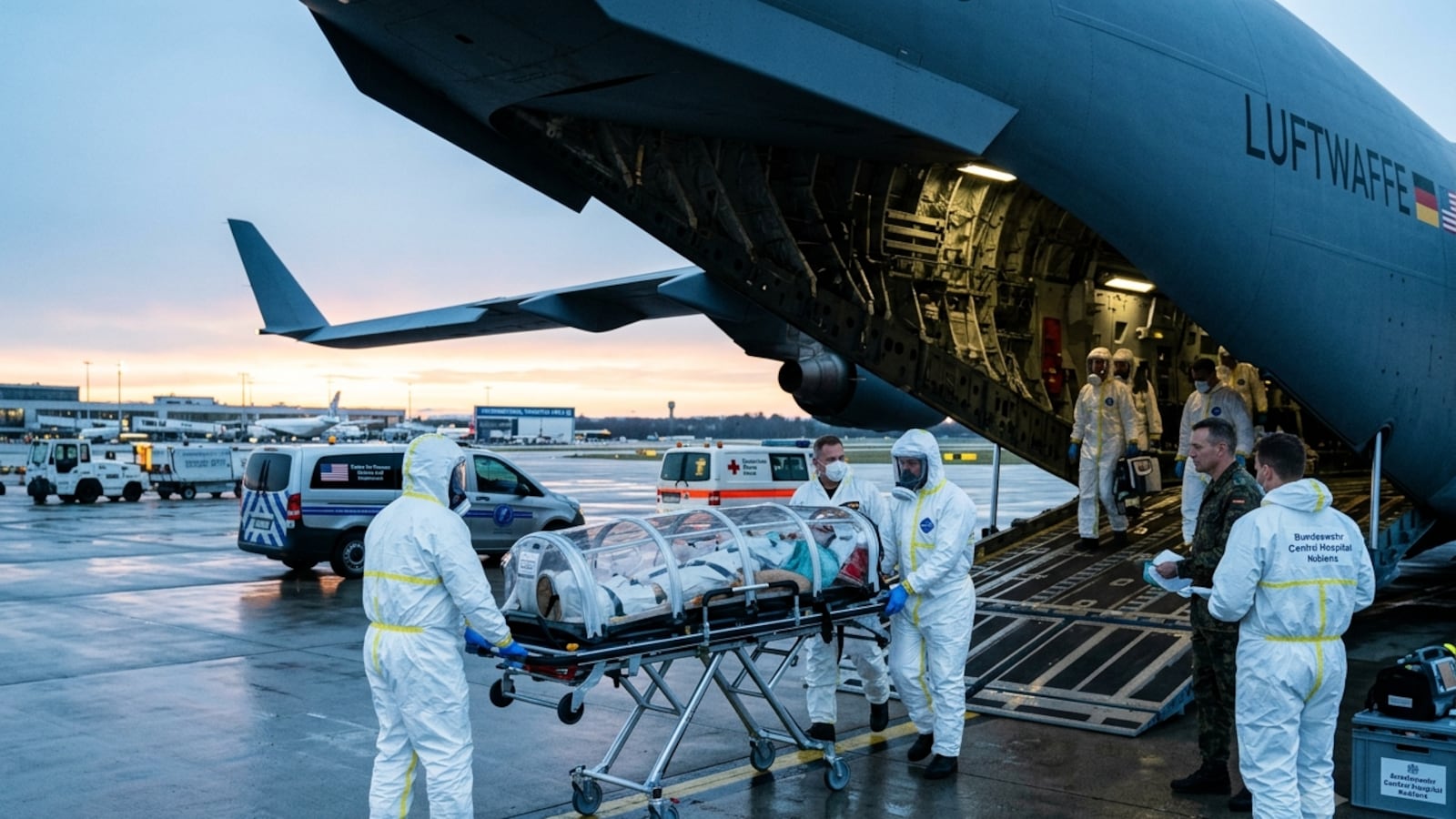
Top Summary
- What happened: A U.S. missionary, Peter Stafford, contracted the rare Bundibugyo strain of Ebola in the Democratic Republic of Congo (DRC) and is being transferred to Germany for treatment.
- Why it matters: The outbreak has killed over 130 people in the DRC, raising concerns about international spread and the effectiveness of containment measures.
- What changes for people: The U.S. has implemented entry restrictions for travelers from the DRC, Uganda, and South Sudan. However, the Africa CDC criticizes these curbs.
- Who is affected: Primarily, the people of the DRC and surrounding regions, healthcare workers, and travelers to and from affected areas are at risk. Six high-risk contacts are also being quarantined in Europe.
Ebola Outbreak and Patient Transfer
A U.S. citizen, identified as medical missionary Peter Stafford, has contracted Ebola in the Democratic Republic of Congo (DRC). He is being transported to Germany for specialized treatment.
The DRC is experiencing an outbreak of the rare Bundibugyo strain, which has claimed over 130 lives. The patient will be treated at Berlin's Charite University Hospital.
Germany has confirmed it is preparing a special isolation ward. U.S. authorities requested assistance for the patient's care.
High-Risk Contacts and Quarantine
Six individuals considered "high-risk contacts" are traveling to Europe. They will undergo quarantine during their monitoring period.
Most of these individuals will be quarantined in Germany. One person will be quarantined in the Czech Republic.
Dr. Satish Pillai from the U.S. Centers for Disease Control and Prevention (CDC) confirmed the travel plans.
Africa CDC's Criticism of Travel Restrictions
The Africa CDC has criticized the U.S.'s decision to impose travel restrictions. They argue that travel curbs are not effective.
"The fastest path to protecting all countries in the world is to aggressively support outbreak control at the source," said Africa CDC Director General Dr. Jean Kaseya. "Global health security cannot be achieved through borders alone."
The Africa CDC believes focusing on outbreak control in the DRC is a more effective strategy.
U.S. Response and Prevention Measures
The U.S. CDC maintains that the risk to the United States remains low. The agency is working with health departments on patient isolation and testing.
Entry restrictions have been announced for travelers who have departed from or were present in the DRC, Uganda, and South Sudan during the past 21 days.
Genetic testing has confirmed that current Ebola diagnostic tests are effective for the Bundibugyo strain.
CDC's Presence in Africa
The U.S. CDC has a country office with 30 staff members in the DRC. They also have another office with 100 staff in neighboring Uganda.
The CDC is providing assistance with disease tracking, contact tracing, and sample collection.
One CDC expert will be sent to the region. The CDC is working with FIFA to ensure traveler safety during the upcoming World Cup.
What to Watch Next
The condition of the U.S. missionary in Germany will be closely monitored. Further developments in the Ebola outbreak in the DRC and the effectiveness of containment measures will be crucial in assessing future risks and travel advisories.