
Earth's Magnetic Field Flips Take Longer Than Previously Thought: New Study
Earth's magnetic field reversals can last millennia longer than previously believed.
Top Summary
- What happened: A new study reveals that Earth's magnetic field reversals can last for tens of thousands of years, much longer than the previously estimated 10,000 years.
- Why it matters: Prolonged weakening of the magnetic field exposes the planet to increased solar radiation, potentially impacting the atmosphere, environment, and evolution of life.
- What changes for people: This research deepens our understanding of the Earth's geodynamo and its long-term effects on the planet's habitability.
- Who is affected: Scientists, geologists, and researchers studying Earth's history, climate, and the evolution of life are most directly affected.
Ancient Magnetic Field Reversals
For decades, geologists estimated magnetic pole flips took roughly 10,000 years. A new study in Communications Earth & Environment challenges this.
Researchers analyzed data spanning 40 million years and found reversals lasting significantly longer.
Deep-Sea Sediment Analysis
The team, comprised of scientists from France, Japan, and the U.S., examined deep-sea sediment cores from the North Atlantic Ocean. These cores contained mud that settled roughly 40 million years ago, during the Eocene epoch.
Magnetic minerals in the mud aligned with Earth's magnetic field and became trapped, creating a record. Researchers used X-ray scanning and magnetic measurements to analyze these records.
Extended Reversal Durations
The study revealed reversals lasting 18,000 years and an even longer one stretching across 70,000 years.
These durations far exceed the 2,000- to 12,000-year windows observed in more recent geological history.
Geodynamo Simulations
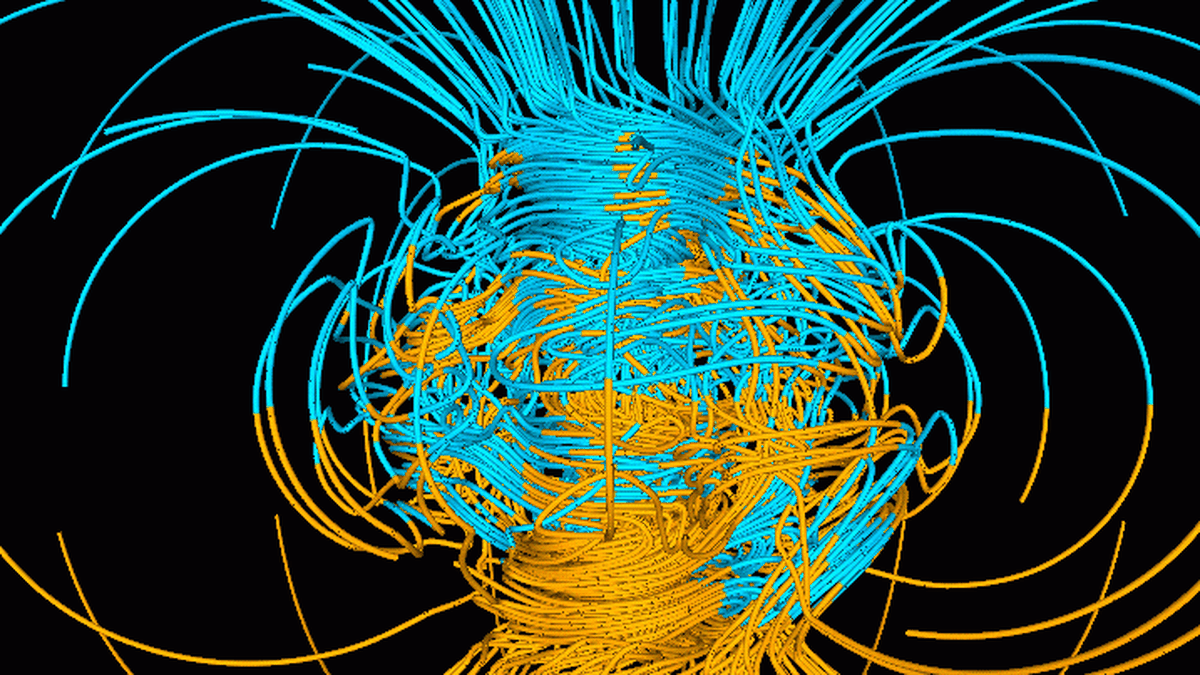
Numerical simulations of Earth's core confirmed these long reversals as a natural, though rare, part of the geodynamo's behavior. A 70,000-year event exhibited a complex precursor phase and multiple "rebounds."
During reversals, the magnetic field weakens, potentially impacting life.
Environmental Impact
A weak magnetic field for 70,000 years could have exposed the atmosphere and surface life to more solar radiation.
Researchers suggest that these prolonged intervals could have influenced ancient environments and the evolution of life on Earth.
What to Watch Next
Future research will likely focus on further analyzing sediment cores from different geological periods to refine our understanding of magnetic field behavior. Understanding the geodynamo's intricacies will help predict potential future impacts on our planet.