
Earth’s Core Is Leaking a Mysterious Metal, Scientists Say: New Research Could Rewrite How Our Planet Formed
What happened: New geochemical analysis suggests Earth’s inner core may be leaking a rare isotope of helium into the mantle. • Why it matters now:...
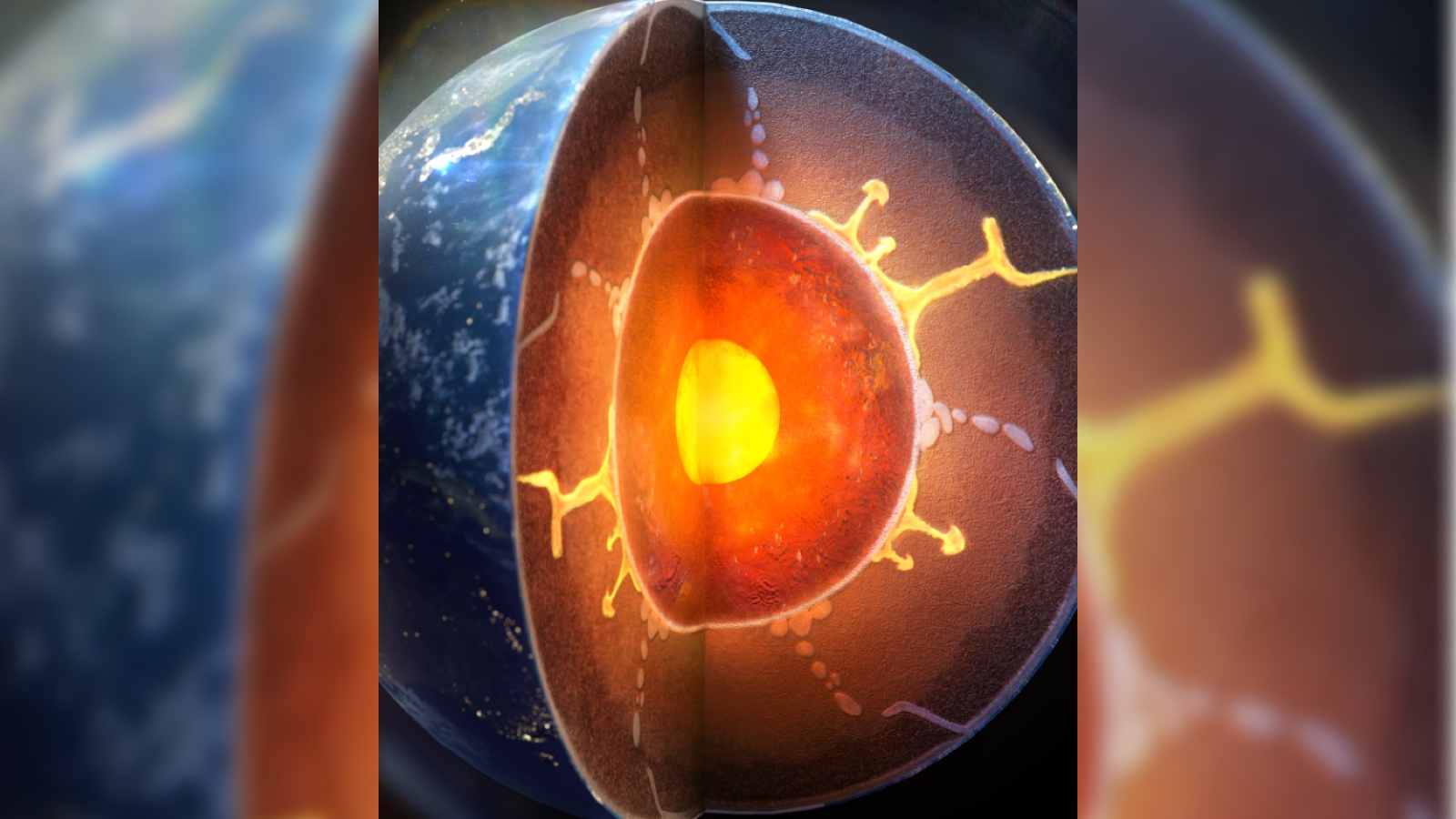
What happened: New geochemical analysis suggests Earth’s inner core may be leaking a rare isotope of helium into the mantle.
• Why it matters now: The discovery challenges long-held theories about Earth’s formation, hinting that part of the core may contain primordial material older than the Solar System.
• What changes for people: Could reshape models used to study earthquakes, volcanic hotspots, and planetary evolution.
• Who is affected: Researchers in geology, climate science, and planetary physics now face major revisions in their models.
A Leak From the Center of the Earth
In a groundbreaking discovery, a team of geochemists has found evidence that helium-3, a rare and ancient isotope, is slowly escaping from Earth’s inner core. The findings, published this week in Nature Geoscience, challenge decades of assumptions about the structure and evolution of our planet.
Helium-3 is exceptionally rare on Earth and is considered a signature leftover from the early Solar System, present before the planet fully formed. Until now, most scientists assumed Earth lost nearly all of it during early violent impacts.
But the new study suggests that a reservoir of helium-3 is still trapped deep within the metallic core, and some of it is now leaking upward into the mantle.
Why This Matters: A New Origin Story for Earth?
If helium-3 is indeed coming from the core, it could mean:
1. Earth’s interior contains untouched ancient material
This would imply that parts of the planet survived the giant impact that created the Moon. Such survival has long been debated in planetary science.
2. Our models of the mantle and volcanic hotspots may be wrong
Mantle plumes beneath places like Hawaii, Iceland, and Réunion are known to release helium-3. Until now, researchers believed the source was deep mantle pockets.
If the core is contributing, we need entirely new models to explain volcanic behavior.
3. The core and mantle interact more than previously thought
For decades, the core was considered isolated. This research suggests chemical exchange is real, slow, and scientifically significant.
How Scientists Detected the Hidden Leak
Researchers used a combination of:
Helium isotope ratios from volcanic rocks
Computer simulations of the early Earth
High-pressure laboratory experiments replicating conditions inside the core
By comparing these datasets, they concluded that the pattern of helium-3 can’t be explained by mantle storage alone. Something much deeper is releasing it.
Lead author Dr. Lin Zhou explained that the isotope ratios “point strongly to a reservoir that predates known mantle sources,” hinting at primordial core material.