
Delhi-Dehradun Expressway: Wildlife Thrives Under Asia's Longest Elevated Corridor
Wildlife successfully uses underpasses on Delhi-Dehradun Expressway.
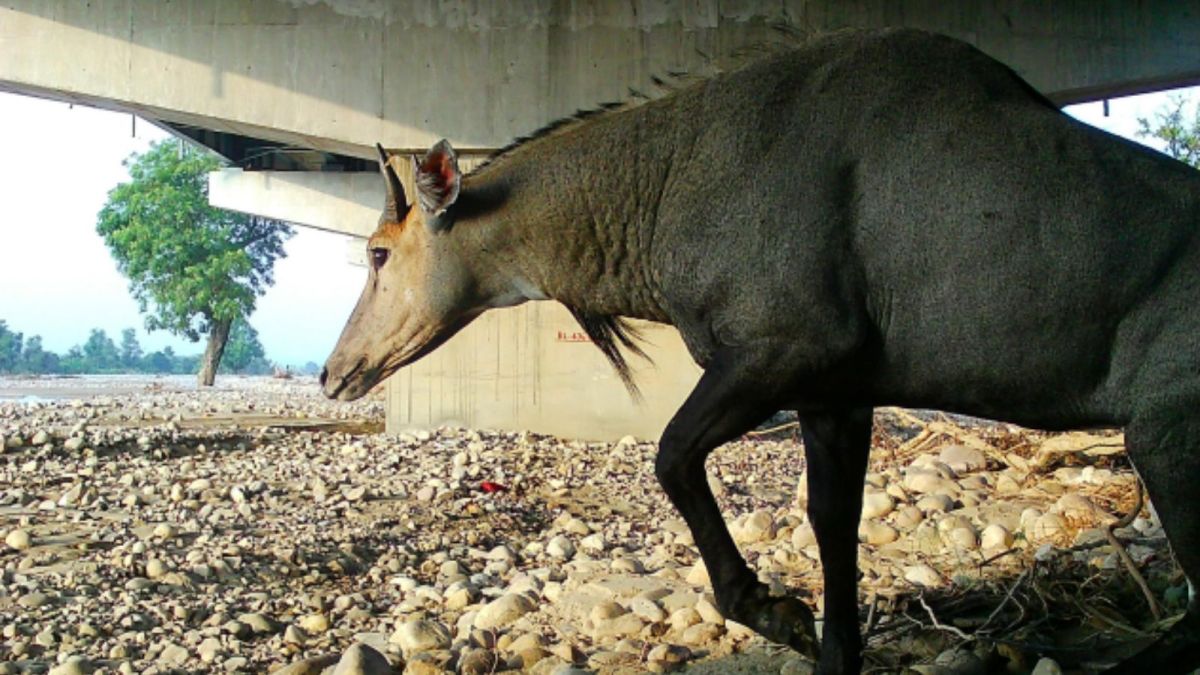
Top Summary
- What happened: A study shows wildlife are using underpasses on the Delhi-Dehradun Expressway.
- Why it matters: It's the first scientific proof of successful animal movement on the corridor.
- What changes: The expressway will open on April 14, potentially impacting wildlife.
- Who is affected: Wildlife in the Terai Arc, commuters, and environmentalists.
Wildlife Success on Delhi-Dehradun Expressway
The NHAI and the Wildlife Institute of India (WII) jointly released a report, 'Landscapes Reconnected', showcasing wildlife using underpasses on the Delhi-Dehradun Economic Corridor.
This is the first scientific evidence proving successful animal movement beneath the expressway.
The 213-km expressway connects Akshardham in Delhi to Dehradun and is set to be inaugurated by PM Narendra Modi on April 14.
Asia's Longest Elevated Wildlife Corridor
The study, titled 'Landscape Reconnected,' observed at least 18 species using the underpasses along an 18-km stretch between Ganeshpur (UP) and Asharodi.
This includes carnivores, herbivores, ungulates, pheasants, and primates.
The 12-km elevated wildlife corridor over the Mohand area is one of Asia's longest.
Species Spotted
Animals documented using the underpasses include elephants, leopards, spotted deer, sambar, nilgai, golden jackals, peacocks, and wild boar.
Golden jackals were the most frequently recorded, followed by nilgai, sambar, and spotted deer.
Elephants were recorded using the corridor on at least 60 occasions.
Monitoring the Wildlife
The findings are based on a 40-day monitoring exercise.
Researchers analyzed over 1.1 lakh images captured through camera traps and acoustic recorders.
The 20-km stretch between Ganeshpur and Asharodi features nearly 11 km of dedicated animal underpasses.
The Terai Arc Landscape
The landscape falls within the Terai Arc, a critical conservation zone.
It forms the westernmost distribution range for species such as tigers, elephants, greater hornbills, and king cobras.
The expressway passes through the Shivalik Elephant Corridor and the edge of Rajaji Tiger Reserve.
Soundscape Management
The study identified soundscape management as a key factor.
Generalist species like jackals tolerate traffic noise, but sensitive species prefer quieter underpass segments.
Researchers suggest targeted noise barriers in high-use areas.
Expert Opinions
"This is the world's largest viaduct of 12 km. It will help in the unobstructed movement of wildlife from Uttarakhand to Himachal Pradesh and Haryana,"
said Bilal Habib, WII scientist.
YV Jhala, former dean of WII, cautioned that movement alone does not guarantee settlement.
"Wildlife needs not just passage, but viable habitat,"
he said.
Environmental Concerns
Local environmentalists urge caution in interpreting early findings. Reenu Paul, a Dehradun-based environmentalist, said a more accurate assessment is needed once the road is fully operational.
"The study was conducted before the expressway became operational. It is yet to witness full traffic volumes, especially during peak tourism seasons. A more accurate assessment will only be possible once the road is fully in use,"
she said.
What to Watch Next
Future studies will assess the long-term impact of the fully operational expressway on wildlife movement and habitat viability. Further monitoring will be crucial to determine the corridor's effectiveness in supporting diverse wildlife populations.