
Deep Beneath the Bermuda Triangle, Scientists Discover a Massive Rock Layer That Defies Geological Norms
Scientists studying the Earth’s interior beneath the Bermuda Triangle have uncovered a striking geological anomaly: an unusually thick layer of rock buried deep below the...
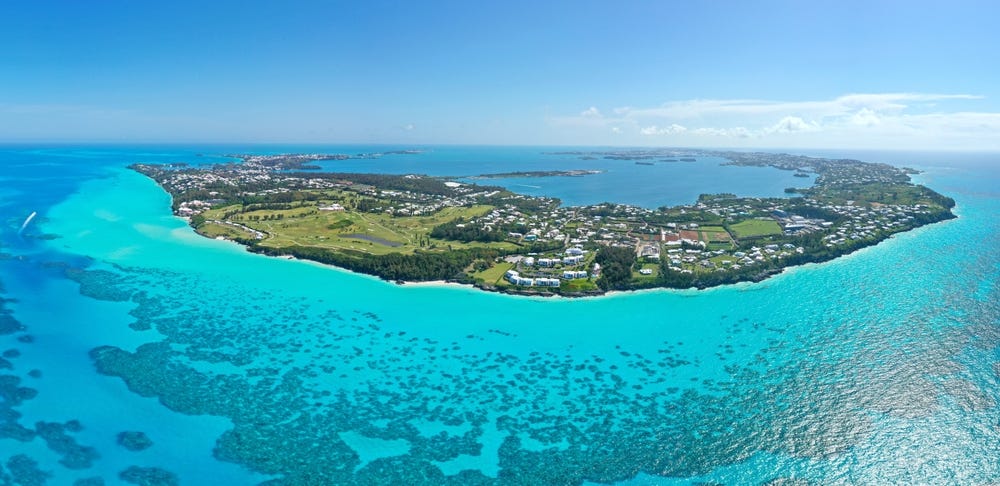
Scientists studying the Earth’s interior beneath the Bermuda Triangle have uncovered a striking geological anomaly: an unusually thick layer of rock buried deep below the ocean floor, unlike anything previously identified elsewhere on the planet. The discovery, reported by Live Science and detailed in the journal Geophysical Research Letters, is prompting fresh questions about how volcanic islands form—and how ancient geological processes continue to shape the planet today.
The Bermuda Triangle, located between Florida, Puerto Rico, and Bermuda, is better known in popular culture for legends of vanishing ships and aircraft. But this time, the mystery lies far below the ocean’s surface.
What Scientists Found
Using seismic data from distant earthquakes, researchers from Carnegie Science and Yale University mapped the subsurface structure beneath Bermuda. Instead of the expected transition from oceanic crust directly into the Earth’s mantle, they identified an extra rock layer roughly 12.4 miles (20 kilometres) thick.
This layer sits within the tectonic plate itself, between the crust and the deeper mantle. It is unusually low in density and significantly thicker than similar structures observed under other parts of the ocean floor.
“Normally, you’d expect oceanic crust to sit directly on the mantle,” said William Frazer, lead author of the study and a seismologist at Carnegie Science, in comments to Live Science. “But beneath Bermuda, there’s this additional layer embedded within the tectonic plate, and that’s highly unusual.”
A Relic of Ancient Volcanism
Researchers believe the rock layer is a geological remnant of intense volcanic activity that occurred millions of years ago—possibly linked to the breakup of the ancient supercontinent Pangea.
Although Bermuda has not experienced volcanic eruptions for tens of millions of years, this buried structure suggests that molten material once surged upward, altering the composition of the tectonic plate from within.
The finding challenges the traditional model in which volcanic islands form primarily from mantle plumes rising from deep within the Earth. Instead, it points to a more complex history involving long-lived structures trapped inside tectonic plates.
Explaining Bermuda’s Elevated Seafloor
One long-standing puzzle in marine geology is why the seafloor around Bermuda is about 1,640 feet (500 metres) higher than surrounding areas of the Atlantic, despite the absence of recent volcanic or tectonic activity.
The newly discovered rock layer may provide the answer.
“There’s still material left over from the time when Bermuda was volcanically active,” said Sarah Mazza, a geologist at Smith College who was not involved in the study. Speaking to Live Science, she explained that this residual material could be supporting the island from below, keeping it elevated compared to the surrounding ocean floor.
Why This Discovery Matters
The implications extend well beyond Bermuda:
-
Rewriting island formation models: The finding suggests that some volcanic islands may be supported by ancient, embedded structures rather than active deep-mantle processes.
-
Clues to Earth’s past: If linked to Pangea’s breakup, the layer preserves evidence of tectonic and volcanic activity dating back hundreds of millions of years.
-
Global relevance: Similar hidden structures could exist beneath other oceanic islands but remain undetected due to limited seismic data.
“Studying an extreme place like Bermuda helps us understand what’s unusual—and what’s normal—about Earth’s geological processes,” Frazer said.
What Comes Next
The research team plans to search for comparable rock layers beneath other islands, which could significantly alter scientists’ understanding of how tectonic plates evolve over time.
If similar structures are found elsewhere, they may reveal that Earth’s crust and upper mantle are far more heterogeneous—and historically complex—than previously believed.