
Chinese EV Makers Gain Strong Foothold in India, Challenging Tata and Mahindra’s Dominance
China-backed electric vehicle (EV) manufacturers have rapidly emerged as major competitors in India’s fast-growing passenger EV market, securing nearly one-third of sales and reshaping one...
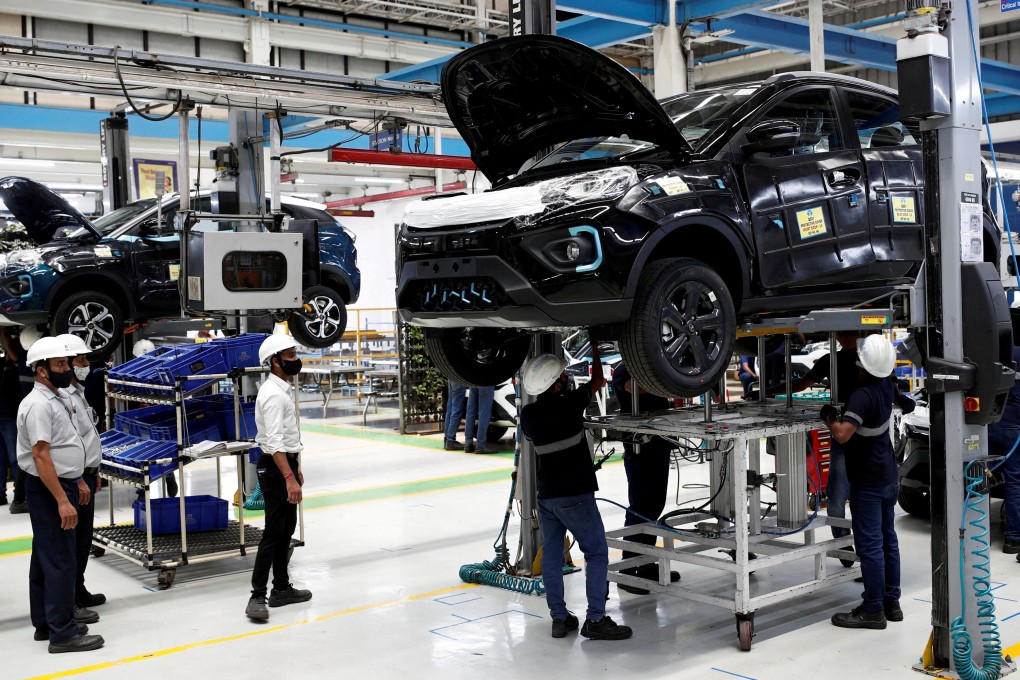
China-backed electric vehicle (EV) manufacturers have rapidly emerged as major competitors in India’s fast-growing passenger EV market, securing nearly one-third of sales and reshaping one of the world’s most promising automotive frontiers. According to ET Auto, companies such as BYD, MG Motor, and Volvo (owned by China’s Geely) have overtaken several long-established South Korean and German carmakers within just two years.
Their rise underscores an intensifying global contest for EV leadership in India, where domestic firms Tata Motors and Mahindra & Mahindra continue to hold the largest share.
Tech-Driven Appeal Fuels Consumer Shift
Chinese-origin or Chinese-owned automakers have captured significant attention among Indian buyers who prioritise cutting-edge technology, longer driving range, advanced battery systems, and enhanced reliability. Industry executives say these companies have pushed Indian consumers to expect faster product updates and higher feature sophistication.
As India’s EV adoption accelerates, more Chinese automakers — including Xpeng, Great Wall Motors, and Haima — are evaluating potential entry strategies. Analysts say the recent easing of diplomatic tensions between New Delhi and Beijing may create a more conducive environment for these firms, though regulatory scrutiny of investments from China remains high.
MG Motor: The Early Disruptor
MG Motor India — a joint venture between China’s SAIC Motor and India’s JSW Group — established an early presence and became one of the first foreign brands to scale its EV business.
“Our momentum here is the result of customer-first innovations and a strong grasp of Indian market needs,” said Vinay Raina, Chief Commercial Officer at JSW MG Motor India, as quoted in ET Auto.
Raina emphasised that local manufacturing and high localisation remain critical to maintaining competitiveness in India’s cost-sensitive market.
Global Technology Meets Local Production
BYD, among the world’s largest pure-play EV manufacturers, has built a strong base in India’s commercial and fleet markets and is gradually expanding its passenger vehicle lineup.
Volvo Cars — Swedish in origin but controlled by China’s Geely — has also carved out a niche in the premium EV segment. Though its numbers remain modest, the company sees India as a growing market for luxury electrification.
“Our progress here comes from a loyal customer base and a clear electrification roadmap,” said Jyoti Malhotra, Managing Director of Volvo Car India. Volvo has committed to introducing one new EV every year and now assembles all its models sold in India locally, enabling more competitive pricing.
Volvo regularly conducts customer clinics to refine product features and pricing strategies, reflecting how global brands are tailoring offerings to Indian expectations.
Premium EV Market Becomes More Competitive
The presence of both domestic and international manufacturers has significantly upgraded the premium EV space in India. Feature-rich models from MG, BYD, and Volvo have pushed Indian buyers to expect panoramic digital dashboards, ADAS safety suites, faster charging capabilities, and sophisticated design across multiple price points.
Industry watchers say this heightened competition is helping India leapfrog toward global EV standards faster than anticipated.
Domestic Leaders Still Dominate Overall Market Volume
Despite the strong surge of Chinese-backed companies, Indian automakers remain the backbone of the country’s EV transition.
Data from Jato Dynamics shows:
-
Chinese-owned brands sold 57,260 EVs by October 2025, capturing 33% market share
-
Indian-owned companies sold 101,724 EVs in the same period, a significant increase from 74,442 in 2024
Ravi Bhatia, President of Jato Dynamics, says the success of domestic players is rooted in affordability, localisation, deep distribution networks, and alignment with policies such as FAME-II and the Production-Linked Incentive (PLI) scheme.
Strategic Landscape: Competition and Cooperation Ahead
The rapid expansion of Chinese-linked automakers reflects both India’s openness to global competition and the growing maturity of its EV ecosystem. Their arrival has elevated consumer expectations around battery tech, design, and safety, ultimately benefiting buyers across all segments.
However, regulatory oversight of investments from China — tightened after 2020 — remains a significant factor for any new entrant. Firms considering the Indian market will likely need to navigate a landscape where commercial opportunity is balanced against geopolitical sensitivities.