
China Escalates Rift With Japan to UN, Accuses Tokyo of Threatening Armed Intervention Over Taiwan
Beijing has taken its simmering dispute with Tokyo to the United Nations, issuing its strongest warning yet after Japanese Prime Minister Sanae Takaichi suggested Japan...
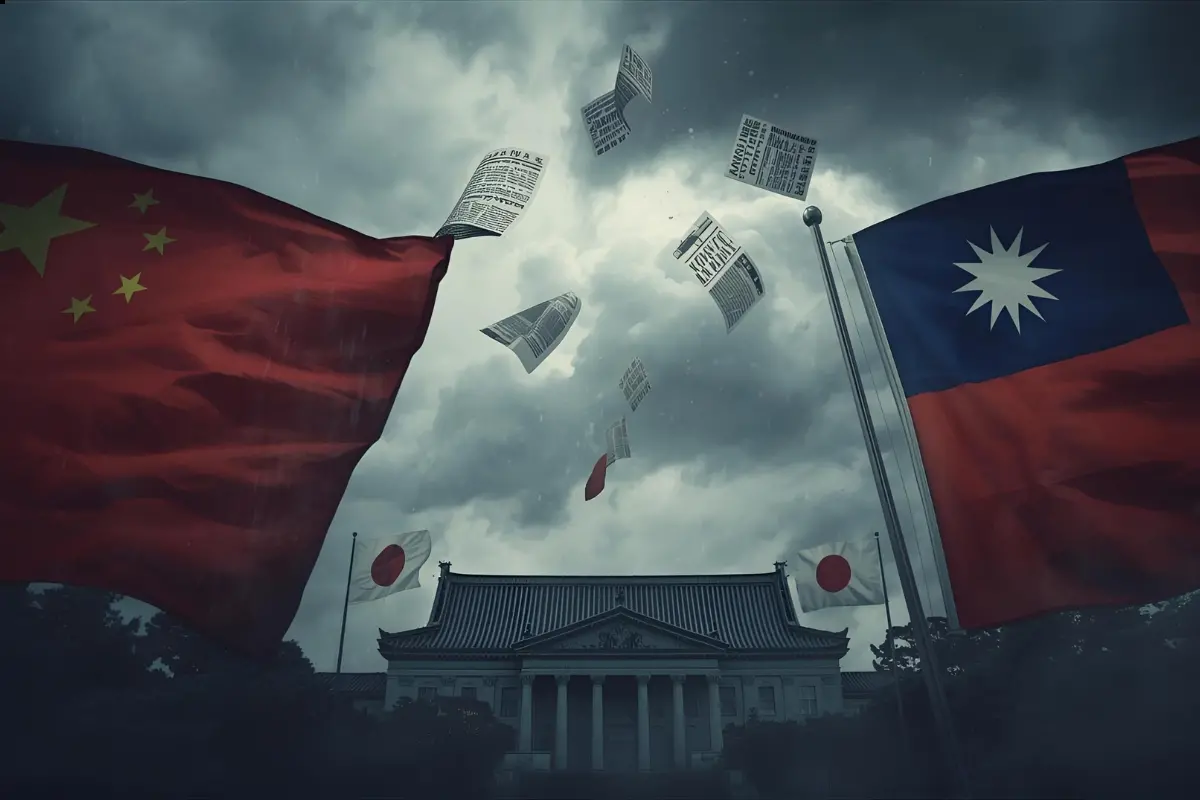
Beijing has taken its simmering dispute with Tokyo to the United Nations, issuing its strongest warning yet after Japanese Prime Minister Sanae Takaichi suggested Japan could militarily respond to a Chinese attack on Taiwan.
In a sharply worded letter to UN Secretary-General António Guterres, China’s ambassador to the UN, Fu Cong, accused Japan of committing a “grave violation of international law” and warned that any attempt by Tokyo to interfere in the Taiwan issue would be treated as “an act of aggression.”
“If Japan dares to attempt an armed intervention in the cross-Strait situation, it would be an act of aggression,” Fu wrote, adding that China would “resolutely exercise its right of self-defence under the UN Charter” to safeguard its sovereignty.
The statement marks the most forceful escalation in a diplomatic clash now entering its third week.
Japan–China Relations Enter Most Serious Crisis in Years
Beijing considers Taiwan—an island with its own democratic government—to be part of its territory and has not ruled out the use of force to achieve unification. Taiwan rejects China’s claims and says its future must be decided only by its 23 million citizens.
The tensions intensified after Prime Minister Sanae Takaichi, who assumed office last month, broke with the strategic ambiguity traditionally maintained by both Tokyo and Washington.
During a parliamentary session on November 7, Takaichi said a Chinese attack on Taiwan—which lies just 100 km from Japanese islands—could be classified as a “situation threatening Japan’s survival.”
Under Japanese law, this designation would legally allow the prime minister to order the Self-Defense Forces into action.
China responded with sharp criticism, claiming Tokyo had crossed diplomatic red lines. The dispute has since spilled over into cultural and trade arenas, with concerts by Japanese artists in China abruptly cancelled and Beijing warning that bilateral trade cooperation has been “severely damaged.”
China Demands Japan Retract Remarks
Ambassador Fu urged Japan to “stop making provocations and crossing the line” and retract what he called “erroneous remarks openly challenging China’s core interests.”
The Japanese government did not immediately comment on the letter, which was sent late Friday (US time).
The diplomatic rupture marks the most intense bilateral friction in years, coinciding with the upcoming 80th anniversary of Japan’s defeat in World War II—a date China often uses to highlight Japan’s wartime atrocities and reinforce its narrative of historical grievance.
Beijing Invokes Postwar Declarations to Bolster Taiwan Claim
China has increasingly referred to the Cairo Declaration (1943) and the Potsdam Declaration (1945) to justify its claim that Taiwan should be “restored” to Chinese rule. However, many governments—including the US and Japan—view these declarations as political statements of intent rather than binding treaties establishing sovereignty.
Complicating matters further, both declarations were signed by the Republic of China (ROC) government, which retreated to Taiwan in 1949 following the Chinese Civil War. The ROC held China’s UN seat until 1971, when it was transferred to the People’s Republic of China (PRC), led by the Communist Party.
Why Takaichi’s Comments Triggered Such a Backlash
-
Japan’s proximity to Taiwan makes any conflict in the Taiwan Strait a direct security threat.
-
Takaichi is seen as one of Japan’s most hawkish leaders in recent times, openly supportive of strengthening Japan’s military posture.
-
By explicitly stating Japan might intervene militarily, she abandoned the careful ambiguity central to East Asian stability for decades.
-
Beijing fears Japan’s stance could embolden other regional powers to more openly resist Chinese claims over Taiwan.
What’s Next?
The confrontation shows no signs of easing:
-
China is expected to raise the issue at upcoming UN forums.
-
Japan’s ruling coalition has signalled it will not soften its stance on Taiwan’s security.
-
Trade and cultural exchanges between the two nations may further deteriorate if tensions continue to rise.
-
Regional observers warn the dispute could reshape Indo-Pacific security dynamics at a moment of heightened global instability.