
Centre Rejects Mining Fears in Aravallis, Says Over 90% of Range Will Remain Protected
The Union government on Sunday firmly dismissed allegations that a newly approved definition of the Aravalli mountain range would open the door to widespread mining,...
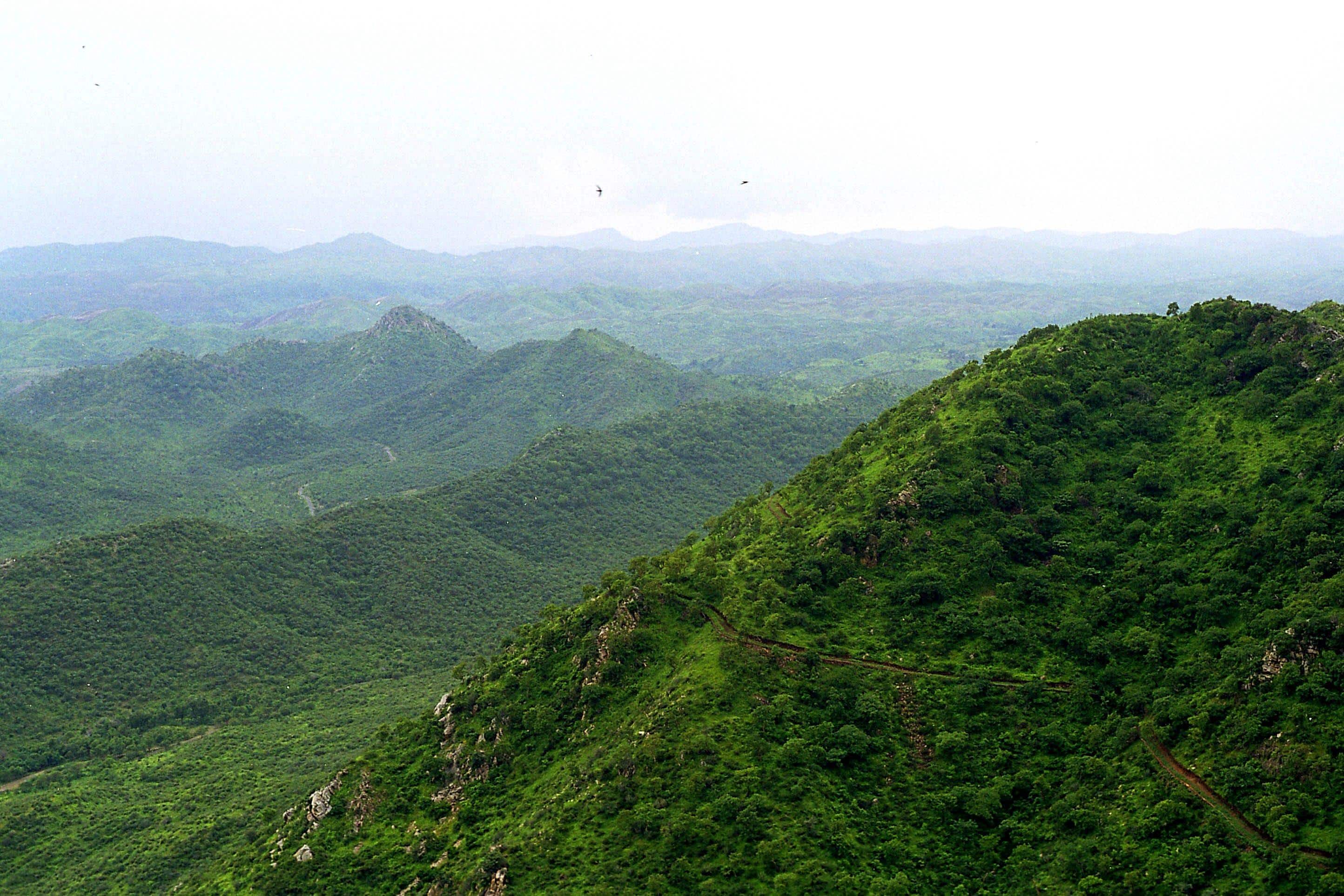
The Union government on Sunday firmly dismissed allegations that a newly approved definition of the Aravalli mountain range would open the door to widespread mining, asserting that more than 90 per cent of the ecologically fragile region will continue to remain under protection.
Citing a Supreme Court–endorsed framework, the Centre said there is a complete freeze on the grant of new mining leases in the Aravalli region until a comprehensive, landscape-level management plan is finalised.
Government Pushback on ‘Misinformation’
Union Environment, Forest and Climate Change Minister Bhupender Yadav said the controversy surrounding the new definition of the Aravallis was driven by misinformation. Speaking to reporters after a meeting related to Project Elephant and the National Tiger Conservation Authority in the Sundarbans, West Bengal, Yadav stressed that no dilution of environmental safeguards had been approved.
“More than 90 per cent of the Aravalli region will come under protected areas,” the minister said, adding that claims of large-scale mining being permitted were “incorrect and misleading.”
In a post on X, Yadav urged critics to “stop spreading misinformation,” responding to allegations, including from the Congress, that the revised definition would lead to the destruction of the Aravalli range.
What the Supreme Court Approved
On November 20, the Supreme Court accepted recommendations made by a committee constituted under the Ministry of Environment, Forest and Climate Change (MoEFCC) to standardise the definition of the Aravalli hills and ranges across states.
Under the approved framework:
-
An “Aravalli Hill” is defined as any landform in designated Aravalli districts rising 100 metres or more above local relief.
-
An “Aravalli Range” comprises two or more such hills located within 500 metres of each other.
The government clarified that this definition does not mean that areas below 100 metres are automatically open to mining. Instead, mining restrictions apply to entire hill systems and the landforms enclosed within their lowest bounding contours—not just the hilltops or slopes.
Why the Definition Was Changed
According to Environment Ministry sources, the Supreme Court ordered a uniform definition after finding that different states were applying inconsistent criteria, which allowed mining activities to creep dangerously close to hill bases.
A committee formed in May 2024—chaired by the Environment Secretary and including representatives from Rajasthan, Haryana, Gujarat and Delhi, along with technical experts—found that only Rajasthan had a formal definition in place, which it has followed since 2006.
That long-standing Rajasthan model treats any landform rising 100 metres or more as a hill and prohibits mining within the lowest contour enclosing the hill, regardless of variations in internal elevation.
All four states have now agreed to adopt this definition, with additional safeguards to improve transparency and enforcement.
Mining Limits and Legal Safeguards
The Centre said that, out of the total Aravalli landscape spanning around 1.44 lakh square kilometres across 37 districts, legally approved mining is currently confined to just 0.19 per cent of the area. Delhi, which has five Aravalli districts, does not permit any mining at all.
As per Supreme Court directions:
-
No new mining leases will be granted in the Aravalli region until the Indian Council of Forestry Research and Education prepares a Management Plan for Sustainable Mining for the entire landscape.
-
Existing mines can continue operations only if they strictly comply with sustainable mining norms.
-
Mining is prohibited in core and inviolate areas, including protected forests, eco-sensitive zones, tiger reserves, wetlands and their buffer areas.
-
Limited exemptions may be considered only for critical and strategic minerals in the national interest.
Focus on Illegal Mining
The government emphasised that the biggest threat to the Aravallis remains illegal and unregulated mining, not legally sanctioned operations. To address this, the committee has recommended stricter monitoring, stronger enforcement mechanisms and the use of technology such as drones and surveillance systems.
Yadav also pointed to initiatives like the Green Aravalli Movement, reiterating the Centre’s commitment to conserving one of India’s oldest mountain systems, which plays a crucial role in groundwater recharge, climate regulation and biodiversity across northwestern India.
Political and Environmental Debate Continues
While the government insists the new framework strengthens protection of the Aravallis, critics remain wary, arguing that implementation and enforcement will be key. Environmental experts note that the Supreme Court’s continued oversight and the forthcoming management plan will ultimately determine whether the revised definition translates into stronger on-ground conservation.
For now, the Centre maintains that the legal and regulatory architecture approved by the top court significantly tightens—not loosens—protections for the Aravalli range.