
Bus-Sized Asteroid 2026 FQ2 to Fly By Earth in 2026: No Threat!
Asteroid 2026 FQ2 will safely pass Earth at a distance of 1.5 million miles in March 2026.
Top Summary
- What happened: A bus-sized asteroid, named 2026 FQ2, is set to fly past Earth on March 24, 2026.
- Why it matters: This event provides an opportunity for scientists to observe near-Earth objects and refine tracking methods.
- What changes for people: No changes; the asteroid poses absolutely no risk of impact or harm to Earth.
- Who is affected: The global scientific community, particularly those involved in asteroid tracking and planetary defense.
Asteroid Flyby: What You Need to Know
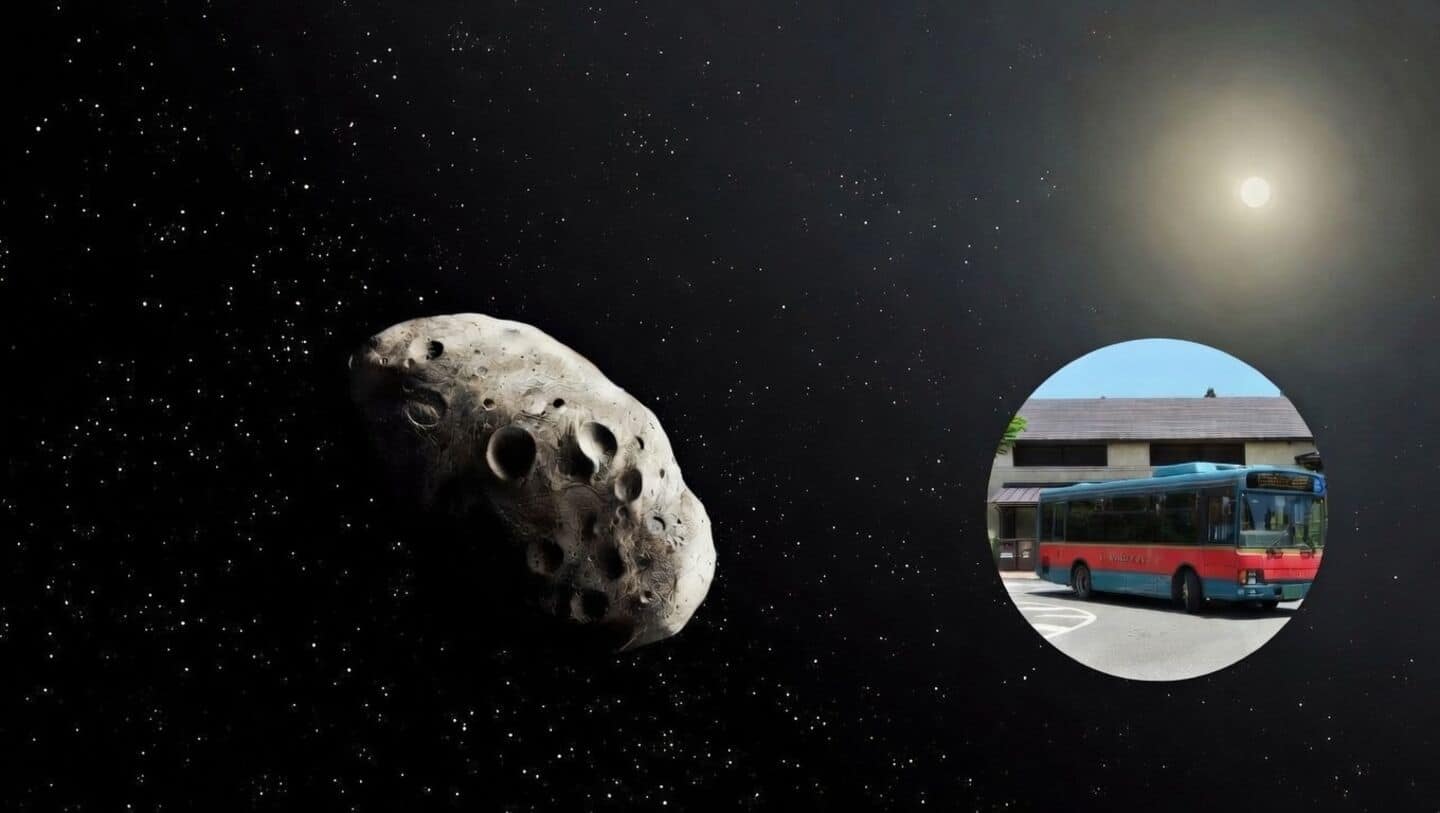
Get ready for a cosmic close encounter! Asteroid 2026 FQ2, roughly the size of a bus, will make a safe flyby of Earth on March 24, 2026.
The asteroid will pass at a distance of approximately 1.5 million miles. That's more than six times the distance between the Earth and the Moon.
Rest assured, space scientists guarantee zero risk of a collision. You can sleep soundly!
No Cause for Alarm
This particular asteroid is significantly smaller than objects considered “potentially hazardous” by astronomers.
Its size and trajectory ensure that it will safely pass by without any chance of hitting our planet.
NASA actively tracks over 35,000 near-Earth objects. So, we are in safe hands.
Tracking Near-Earth Objects
NASA utilizes a network of telescopes and radar systems worldwide to monitor these space rocks.
Projects such as Pan-STARRS and ATLAS are continuously scanning the skies.
Their goal is to discover and catalogue any new objects that might come near Earth.
How to Follow the Asteroid's Journey
If you're interested in following the asteroid's trajectory, you can visit NASA's Asteroid Watch dashboard.
Another resource is the Next Five Approaches tracker, providing real-time updates on close encounters.
Due to its small size and the distance of the flyby, 2026 FQ2 will likely be invisible to amateur telescopes.
What to Watch Next
Scientists will continue to monitor near-Earth objects, refining their tracking and prediction capabilities. The ongoing efforts ensure early warnings of any potential threats, although 2026 FQ2 poses none.