
At COP30, India Warns of Widening Global Adaptation Finance Gap, Calls for ‘Essential Investment’ in Climate Resilience
Environment Minister Bhupender Yadav says developing nations face an acute shortfall in adaptation funding, urging world leaders to scale up finance as COP30 negotiations enter...
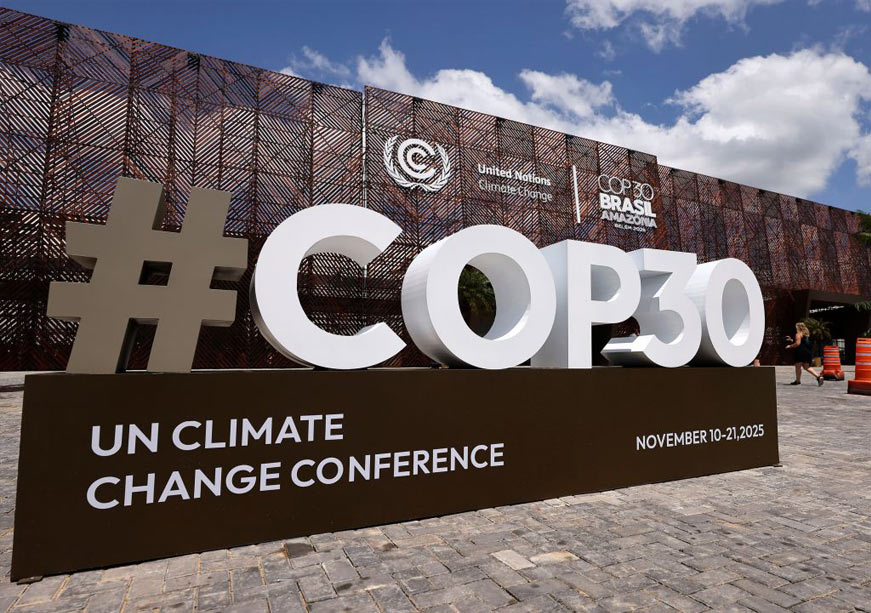
Environment Minister Bhupender Yadav says developing nations face an acute shortfall in adaptation funding, urging world leaders to scale up finance as COP30 negotiations enter critical phase.
India has urged the global community to significantly step up climate adaptation finance, warning that the widening shortfall threatens the ability of developing nations to protect themselves from intensifying climate impacts. Speaking at the Baku High-Level Dialogue on Adaptation during the COP30 climate summit in Belem, Brazil, Environment Minister Bhupender Yadav said the world is “far off track” from meeting existing financial commitments.
Adaptation Finance Gap Growing Wider
Citing the newest projections from the 2025 Adaptation Gap Report, Mr. Yadav noted that developing countries could require $310–365 billion per year by 2035, while current international adaptation flows hover at just $26 billion.
He warned that the global promise made at COP26 in Glasgow—to double public adaptation finance to roughly $40 billion annually by 2025—is now unlikely to be met.
India believes “adaptation cannot remain an afterthought,” the minister said, stressing that COP30 must deliver a clear political message that resilience-building is an “essential investment.”
Mr. Yadav added that implementing the Baku to Belem Roadmap, which envisions mobilising $1.3 trillion in climate finance, will require “collective political will and systemic reform.”
India Highlights Domestic Commitment, Global Challenges
Marking ten years of the Paris Agreement, the Minister referenced Article 7.6, which calls on developed countries to support vulnerable nations in implementing adaptation strategies. He said India has been strengthening domestic systems even as global support lags behind.
Between 2016–17 and 2022–23, India’s adaptation-focused public expenditure rose by over 150% as a share of GDP, according to government data. The country has also improved its ability to access climate finance through enhanced readiness programmes and capacity-building efforts across accredited institutions.
Despite this progress, Mr. Yadav outlined several persistent barriers for developing countries:
-
Slow and complex approval processes in multilateral climate funds
-
High transaction costs and limited institutional capacities
-
Unclear or weak revenue streams for adaptation projects
-
Lack of adequate risk-sharing mechanisms to mobilize private capital
“These systemic issues must be collectively addressed,” he said, arguing that adaptation finance should be predictable, concessional and primarily grant-based—not dependent on debt-creating instruments.
Why Adaptation Matters Now
As global temperatures continue to rise, adaptation—strengthening resilience to floods, droughts, extreme heat and sea-level rise—has become increasingly urgent for developing nations. The Paris Agreement envisions holding warming to well below 2°C, ideally 1.5°C, but scientists warn that without immediate action, climate shocks will intensify, undermining food security, infrastructure, health and economic stability.
India reiterated its position that adaptation must be:
-
Country-led and locally grounded
-
Gender-responsive and inclusive
-
Guided by science, local knowledge and traditional practices
COP30 Negotiations Enter Final Stretch
Negotiators from nearly 200 countries gathered in Belem are currently reviewing a draft text prepared by host Brazil as the summit nears conclusion. The discussions are expected to influence global climate policy heading into COP31.
Looking ahead, Mr. Yadav said adaptation indicators under the Global Goal on Adaptation (GGA) should remain voluntary and non-prescriptive, ensuring that countries are not burdened with additional reporting obligations.
He called for:
-
Streamlined access to climate finance
-
Reduced transaction costs
-
Stronger enabling environments for local solutions
-
Increased investment in agriculture, water security, resilient infrastructure and ecosystem-based adaptation
“Adaptation and mitigation are not competing priorities—they are complementary pillars of the Paris Agreement,” he said.