
Artemis II: NASA Mission Soars Beyond Earth Orbit in Historic Lunar Flyby
Artemis II successfully escapes Earth's orbit, sending a crew towards the Moon for a flyby.
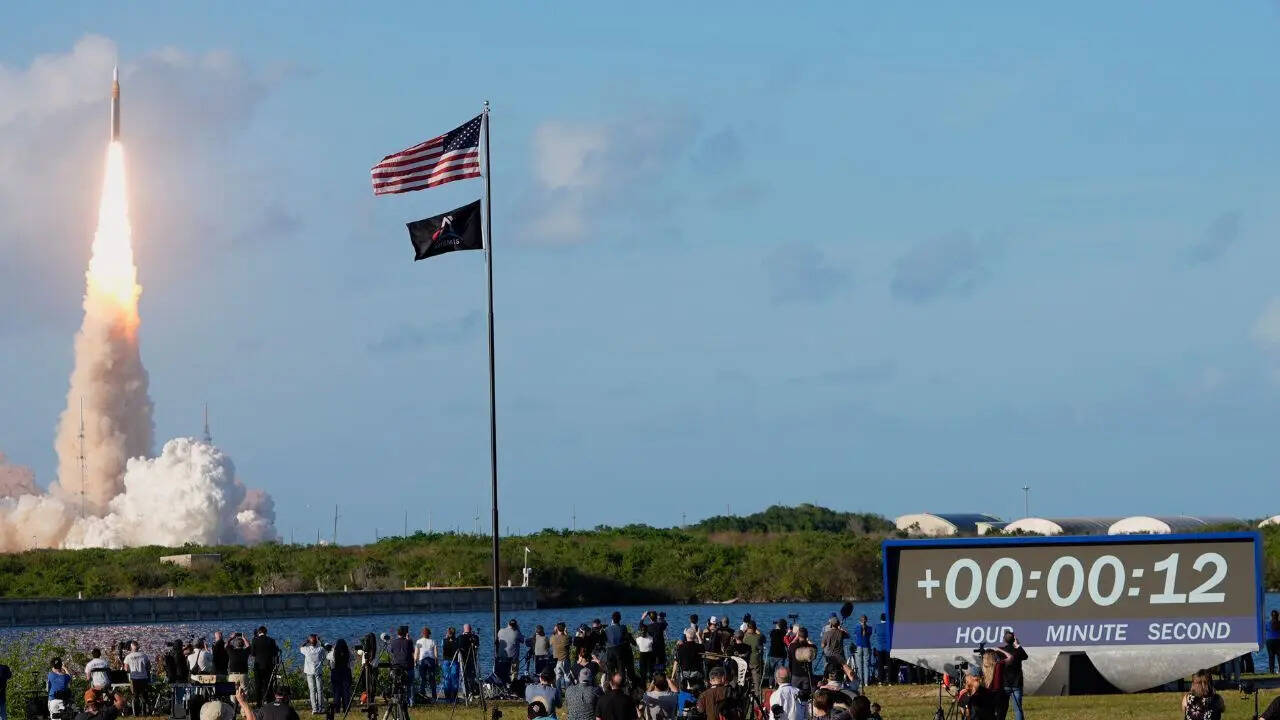
Top Summary
- What happened: NASA's Artemis II executed a successful trans-lunar injection, propelling its crew towards a lunar flyby.
- Why it matters: It's the first time humans have left Earth's orbit since 1972's Apollo 17, marking a resurgence in deep-space human exploration.
- What changes: This mission paves the way for future lunar landings and a sustained human presence on the Moon.
- Who is affected: The global scientific community, future astronauts, and anyone interested in space exploration.
Artemis II Blazes Trail to the Moon
NASA’s Artemis II mission achieved a pivotal milestone Thursday. The spacecraft successfully completed a critical engine burn, venturing beyond Earth's orbit.
The crew is now en route to the Moon for a flyby. The trans-lunar injection occurred roughly 25 hours post-liftoff.
Historic Journey Begins
The Orion spacecraft departed Earth orbit as planned, initiating its nearly 400,000-kilometre journey.
Lori Glaze, a NASA official, confirmed the maneuver was flawless.
"This is the first time since 1972, during Apollo 17, that humans have left Earth's orbit,"
Canadian astronaut Jeremy Hansen described the crew as captivated by the view. He called the mission a reflection of humanity’s shared ambition.
"It’s a phenomenal sight,"
A Crew of Firsts
Commander Reid Wiseman, pilot Victor Glover, mission specialist Christina Koch, and Hansen will loop around the Moon. The astronauts will return to Earth without landing.
The mission aims to surpass the distance record set during Apollo 13 in 1970. A new speed record could be set during reentry on April 10.
Glover, Koch, and Hansen are making history. They are the first Black astronaut, the first woman, and the first non-American to travel to the moon.
Challenges and Triumphs
Minor hiccups included a malfunctioning toilet system and cold cabin temperatures. Engineers addressed a water dispenser issue by instructing astronauts to use backup storage bags.
Mission Control set the tone with music before the engine burn. They described the journey as “humanity’s lunar homecoming.”
The spacecraft is now following a free-return trajectory. It uses Earth and Moon gravity to complete its figure-eight path.
Lunar Flyby Looms
The next milestone is Monday’s lunar flyby. Orion will pass roughly 6,400 kilometres beyond the Moon.
The astronauts are also expected to witness a total solar eclipse from space.
What to Watch Next
NASA hopes Artemis II will pave the way for future lunar landings. A planned crewed mission to the moon later this decade aims to mark a new era of human exploration beyond Earth.