
Artemis II Moon Mission: NASA Acknowledges Significant Risks Ahead of Launch
NASA acknowledges risks as Artemis II prepares for its lunar mission.
Top Summary
- What happened: NASA officials openly discussed the risks associated with the upcoming Artemis II mission to the Moon.
- Why it matters: Artemis II marks the first crewed lunar vicinity mission since 1972, pushing the boundaries of space exploration and technology.
- What changes for people: The mission's success is critical for future lunar landings and long-term space exploration goals.
- Who is affected: The Artemis II crew, NASA workforce, the White House, lawmakers, and the public are all invested in the mission's outcome.
Artemis II Launch Approaching Amidst Risk Discussions
NASA is proceeding with final preparations for the Artemis II mission, scheduled for launch no earlier than April 1st at 6:24 pm EDT (22:24 UTC).
Officials addressed the inherent risks of the mission during a press conference following a Flight Readiness Review (FRR) at Kennedy Space Center.
Lori Glaze, NASA’s acting associate administrator for exploration system development, emphasized the value of risk assessments while also acknowledging their limitations.
"I think sometimes we get tricked into believing that those numbers are somehow really telling us something critically important," Glaze said.
Novelty and Unknowns Shape Risk Assessment
Artemis II will travel over 1,000 times farther from Earth than the ISS, venturing thousands of miles beyond the far side of the Moon.
The nine-day mission relies on the Space Launch System (SLS) and Orion spacecraft, which have only flown together once before (Artemis I).
NASA officials admitted that the novelty of the mission makes it difficult to accurately quantify the risk.
Technical Challenges and Mitigation Efforts
The Artemis II launch was originally slated for early February but faced delays due to a leaky hydrogen seal and helium loading issues.
The rocket has been returned to the hangar for repairs and will return to the launch pad next week. Mission managers will forgo another fueling test.
Glaze stated that the new hydrogen seals are "the best seals that we've ever seen on the SLS."
Astronaut Input and Safety Priorities
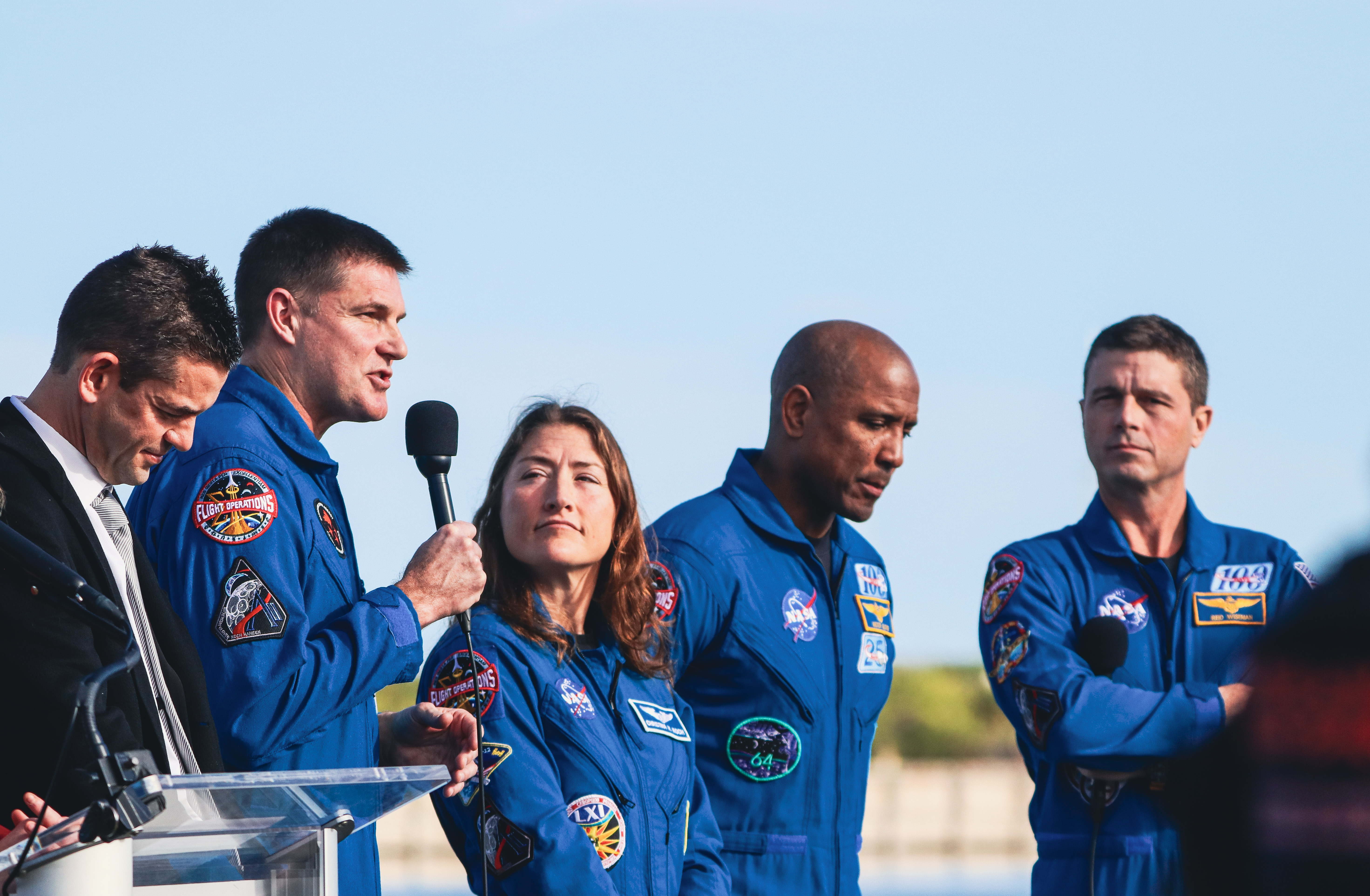
The four Artemis II astronauts participated virtually in the FRR, focusing on the Orion spacecraft’s heat shield and reentry trajectory.
Communication challenges and the environmental control and life support systems were also key areas of discussion.
"The question was, 'Are we going to be able to hit that entry interface and get them back on Earth safely,'" Glaze said of the crew’s comments during the FRR.
Quantifying the Unquantifiable: Risk Probability
John Honeycutt, chair of the Artemis II mission management team, addressed risk uncertainties with unusual candor.
He referenced the "failure of imagination," a term coined after the Apollo 1 fire, stressing the importance of anticipating potential problems.
Statistically, about half of all rockets fail on their first flights.
Balancing Ambition and Safety
Honeycutt and Glaze aim to reduce the failure rate to below 1 in 50 (2%) with a regular launch cadence.
NASA’s inspector general set the agency’s “loss of crew threshold” at 1 in 30 for Artemis missions overall.
However, the long intervals between Artemis missions pose additional risks.
Future Missions and the Need for Speed
Jared Isaacman, NASA Administrator, announced a program shake-up to accelerate Artemis III, aiming to demonstrate docking with a commercial lunar lander in low-Earth orbit next year.
Artemis IV is now slated to attempt the first human landing at the Moon's south pole, potentially in 2028, contingent on the success of Artemis II and III and the availability of lunar landers.
Assessing Artemis II's Risk Profile
Honeycutt admitted that Artemis II’s risk assessment falls short of the 1-in-50 goal due to the long gap since the first flight.
He estimates the risk is closer to 1 in 2, acknowledging the limited data available.
"I think we’re being really careful not to really lay probabilistic numbers on the table for this mission, just given the small amount of data." Honeycutt said.
What to Watch Next
NASA will proceed with final launch preparations, targeting an April launch window. Further updates regarding the agency’s risk assessment for Artemis II are expected as the launch date approaches.