
Aditya-L1 Poised to Study the Sun at Peak Fury in 2026
India’s first dedicated solar observatory is preparing for its most critical scientific phase as the Sun approaches its “solar maximum” in 2026. The mission is...
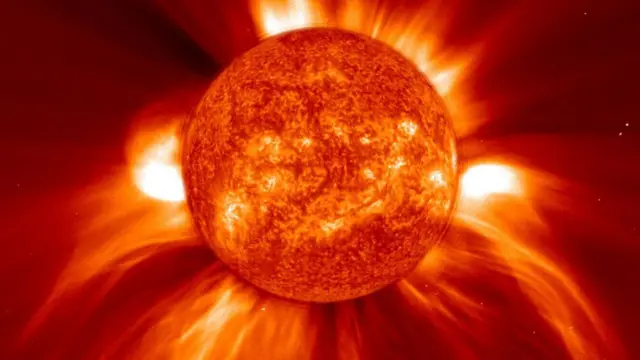
India’s first dedicated solar observatory is preparing for its most critical scientific phase as the Sun approaches its “solar maximum” in 2026. The mission is expected to deliver unprecedented insights into violent space weather that can disrupt satellites, power grids, aviation routes, and global communications.
India’s Solar Mission Enters a Defining Moment
Aditya-L1, launched by ISRO in 2023 and currently stationed at the Lagrange Point-1—about 1.5 million kilometres from Earth—will soon witness the most active period of the solar cycle. According to ISRO scientists, the mission is perfectly positioned to monitor the Sun as it reaches the peak of its 11-year activity cycle, a phase marked by intense magnetic turbulence, explosive flares, and rapid changes in the solar corona.
The solar maximum is a natural phenomenon that occurs when the Sun’s magnetic poles reverse. Historically, these peak phases generate a surge in solar storms and high-energy radiation that can affect daily life on Earth far beyond astronomy labs.
Why Solar Maximum Matters
During solar maximum, the number of coronal mass ejections (CMEs) — massive eruptions of plasma and magnetic fields — can increase dramatically. These CMEs can trigger geomagnetic storms, which have the potential to:
-
disrupt satellite navigation and communication networks,
-
affect long-distance radio signals,
-
interfere with flights passing near Earth’s polar regions, and
-
in extreme cases, overload electrical grids.
Space agencies worldwide monitor these events closely. ISRO officials say Aditya-L1’s real-time observations will help improve early-warning systems, giving governments and industries more time to safeguard vital infrastructure.
What Aditya-L1 Will Study
The spacecraft carries seven scientific instruments, designed to continuously capture images, measure radiation, and analyse changes in the solar atmosphere. Researchers expect 2026 to be the mission’s most productive year, as high activity will allow them to:
-
map the origins of solar storms,
-
understand how CMEs accelerate through space,
-
track how these events interact with Earth’s magnetosphere, and
-
refine global space-weather forecasting.
Officials involved in the mission note that having a dedicated Indian platform at L1 strengthens India’s independent capability in space-weather prediction—a field increasingly tied to national security and technological resilience.
Expert Perspectives
Space-weather specialists say data from Aditya-L1 will complement observations from NASA and ESA missions, providing a more complete view of solar behaviour. Several scientists have emphasised that improved forecasting could benefit sectors such as telecommunications, aviation, and defense, especially as global reliance on satellite-based systems grows.
What’s Next
With the Sun already showing signs of rising activity, ISRO teams are preparing for a surge in data in the coming months. The agency plans to release regular scientific updates, making 2026 a pivotal year not just for Aditya-L1 but for India’s role in global heliophysics research.