
Aditya-L1 Helps Crack Mystery Behind 2024’s Most Violent Solar Storm, ISRO Confirms
India’s first solar observatory has played a decisive role in explaining why the most powerful geomagnetic storm in more than 20 years behaved so unexpectedly,...
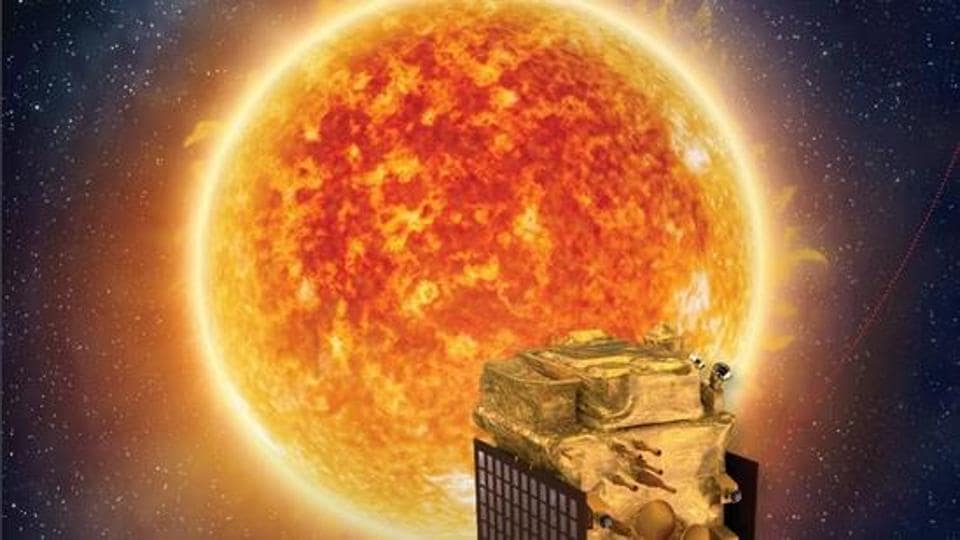
India’s first solar observatory has played a decisive role in explaining why the most powerful geomagnetic storm in more than 20 years behaved so unexpectedly, offering new insights into how solar eruptions evolve on their way to Earth.
A Breakthrough in Space Weather Science
The Indian Space Research Organisation (ISRO) announced on Tuesday that data from Aditya-L1—India’s maiden solar-study mission—helped scientists unravel the unusual behaviour of a massive solar storm that hit Earth in May 2024. The event, later termed “Gannon’s Storm,” caused one of the strongest disturbances to Earth’s magnetosphere since the early 2000s.
The finding, published in Astrophysical Journal Letters by a team of Indian researchers, is being hailed as a significant step forward in understanding extreme space-weather events that can disrupt global communication, navigation systems, and satellite operations.
How Aditya-L1 Made the Difference
For the first time, scientists were able to examine the same storm from multiple vantage points in space. Aditya-L1’s highly sensitive magnetic field measurements were combined with data from six U.S. spacecraft, including NASA’s long-serving Wind mission.
ISRO explained that Aditya-L1 captured the internal magnetic structure of the incoming coronal mass ejections (CMEs)—giant clouds of charged particles hurled from the Sun—at the exact moment when they began to behave abnormally.
According to the mission team, two CMEs collided en route to Earth and compressed each other so forcefully that their internal magnetic field lines snapped and rearranged in a phenomenon known as magnetic reconnection. This is similar to tightly wound ropes suddenly breaking and reforming.
This reconnection dramatically intensified the storm’s impact, leading to stronger satellite disruptions and unusual particle acceleration recorded across multiple spacecraft.
What Made This Event Extraordinary
Researchers detected a colossal reconnection region measuring roughly 1.3 million kilometres across, nearly 100 times the diameter of Earth. ISRO noted that such a large-scale magnetic breakup inside a CME had never been directly observed before.
Typically, a CME approaches Earth with a stable, rope-like magnetic structure. But in this case, the internal “magnetic rope” was shredded and reassembled mid-journey due to the violent collision between the two CMEs. This transformation made the storm far stronger than early forecasts had predicted.
Why This Discovery Matters
Understanding how CMEs evolve between the Sun and Earth is essential for improving global space-weather forecasting—a field that affects everything from aviation routes and military communication to power-grid resilience and satellite health.
Severe geomagnetic storms can:
-
Disrupt GPS-based navigation
-
Trigger radio blackouts
-
Damage satellites
-
Affect long-distance aviation
-
Stress electricity infrastructure
ISRO said the findings demonstrate India’s “growing leadership in global space science,” noting that the country now contributes key observational data to international space-weather research.
Launched in September 2023, Aditya-L1 is India’s first space-based mission dedicated to studying the Sun. Positioned near the L1 Lagrange point, it provides uninterrupted monitoring of solar activity—an advantage that proved crucial for decoding the 2024 storm.
Expert Views
Space-weather specialists say the breakthrough will help refine models that predict how magnetic fields rotate and intensify as they travel through interplanetary space.
“This is exactly the kind of mission synergy we need,” said a senior solar physicist familiar with the study. “Multiple spacecraft observing the same event—from different directions—allow us to piece together a three-dimensional story that was impossible a decade ago.”
Looking Ahead
With increased solar activity expected as the Sun approaches the peak of its 11-year cycle, missions like Aditya-L1 are becoming critical for global preparedness. The new findings will likely influence satellite design, operational safety protocols, and emergency-response planning for years to come.