
Adani Group to Build India’s Largest Battery Energy Storage System at Khavda, Gujarat
Adani Enters Energy Storage with Record-Breaking Project In a major push toward India’s clean energy future, the Adani Group has announced its entry into the...
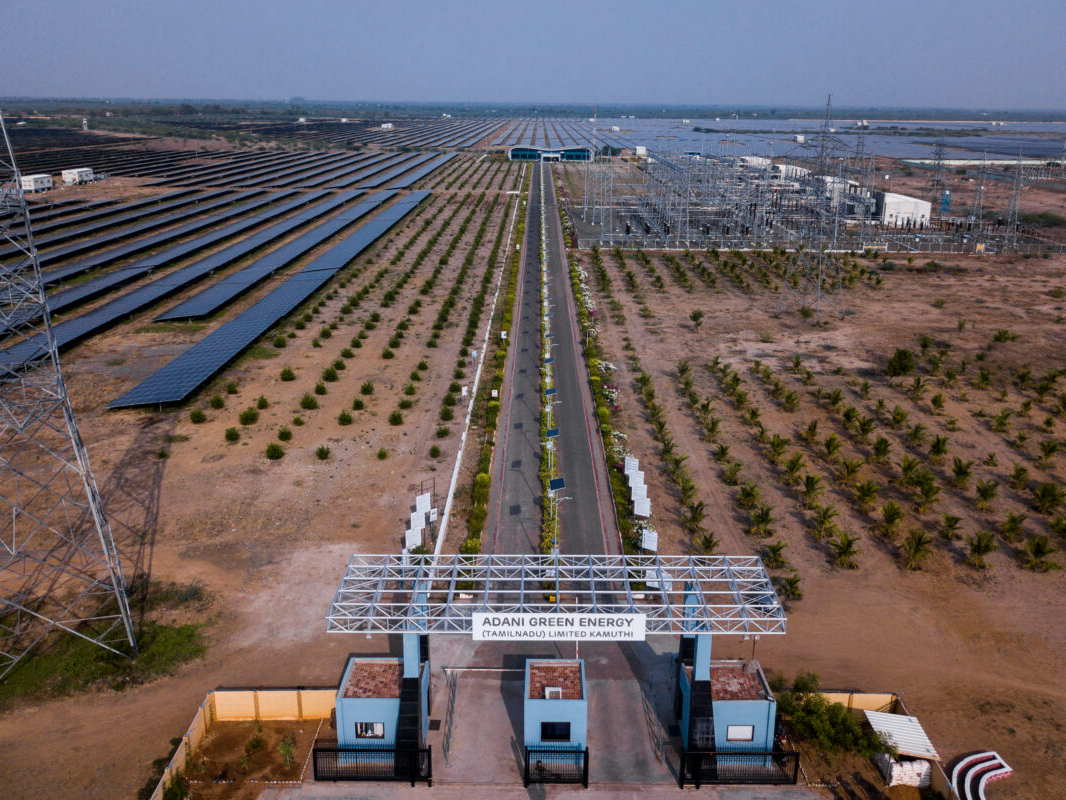
Adani Enters Energy Storage with Record-Breaking Project
In a major push toward India’s clean energy future, the Adani Group has announced its entry into the Battery Energy Storage Systems (BESS) sector with plans to build the country’s largest energy storage installation — and one of the world’s biggest single-site projects — at Khavda in Gujarat.
According to a company statement released on Tuesday, the project is scheduled for completion by March 2026 and will play a central role in supporting India’s transition to a low-carbon economy.
“Energy Storage Is the Cornerstone of a Renewable Future”
Commenting on the project, Gautam Adani, Chairman of the Adani Group, said the initiative underscores the company’s long-term vision for energy independence and sustainability.
“Energy storage is the cornerstone of a renewable-powered future. With this historic project, we are not only setting global benchmarks but also reinforcing our commitment to India’s energy independence and sustainability,” Adani said. “This initiative will enable us to deliver reliable, clean, and affordable energy solutions at scale.”
Project Details: One of the World’s Largest at a Single Site
The upcoming Khavda BESS project will have a power capacity of 1,126 megawatts (MW) and an energy capacity of 3,530 megawatt-hours (MWh) — enough to supply 1,126 MW of electricity for around three hours.
The system will utilize over 700 advanced lithium-ion battery containers, integrated with smart energy management systems to maximize performance and grid stability. The BESS will store surplus renewable power during low-demand hours and release it during peak periods, balancing the grid and reducing dependence on fossil fuels.
When operational, the Khavda site will become the world’s largest combined renewable and storage park, aligning with Adani’s plan to make Gujarat a global renewable energy hub.
Scaling Up: Toward 50 GWh Energy Storage Capacity
Adani Group also outlined its long-term expansion plan, targeting 15 gigawatt-hours (GWh) of energy storage capacity by March 2027 and 50 GWh within five years.
In its statement, the company said this roadmap reflects its “strong commitment to building a modern, clean, and reliable energy system that supports India’s net-zero and climate goals.”
A Rapidly Growing Sector
Battery energy storage is becoming a critical component of modern power systems, particularly as nations increase their reliance on solar and wind energy — both of which are intermittent by nature. BESS enables grid operators to store renewable energy and deploy it when needed, ensuring stability and reliability.
According to Bloomberg, India’s total installed battery capacity is expected to reach around 800 MW by the end of 2025. However, to meet its goal of 500 GW of clean energy capacity by 2030, the country will need to significantly accelerate large-scale energy storage deployment.
With this project, Adani Group joins the ranks of global clean-energy leaders investing in next-generation battery infrastructure — a sector set to define the future of sustainable power generation.
The Road Ahead
By integrating large-scale battery systems with renewable generation, the Adani Group is not only expanding its clean energy portfolio but also addressing one of the biggest challenges in India’s power sector — ensuring round-the-clock renewable supply.
Once operational, the Khavda BESS is expected to serve as a blueprint for large-scale renewable integration, setting new global benchmarks for clean energy innovation and resilience.